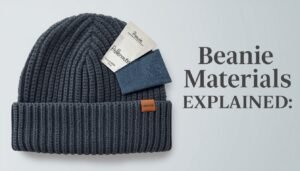
Thermal efficiency in beanie materials is defined by the inverse...
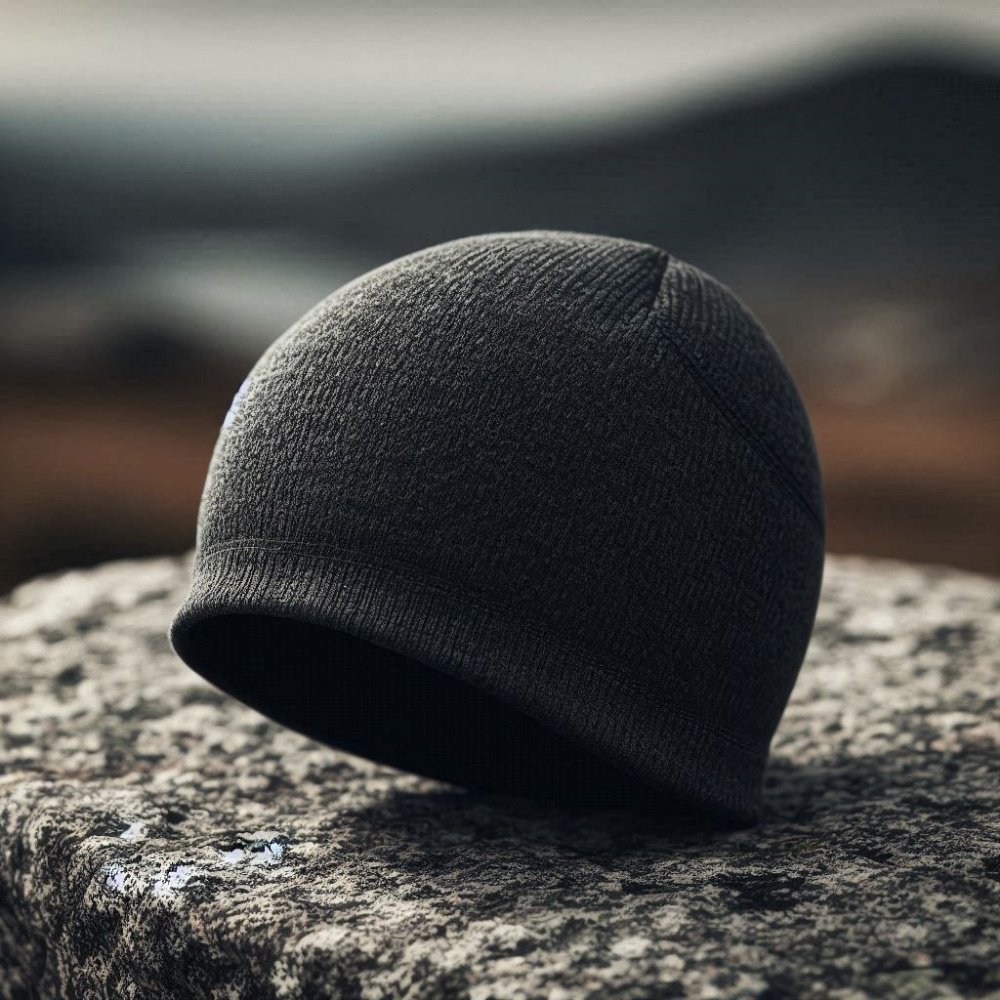
A beanie without cuff is designed to enhance physiological efficiency and helmet integration by reducing the bulk associated with a folded hem, thereby mitigating potential cranial artery compression and minimizing heat entrapment during high-output exertion.
This guide analyzes the three critical performance vectors of technical headwear: vascular comfort (headache prevention), thermodynamic regulation (sweat management), and equipment integration (helmet fit). For individuals who experience localized pressure at the temples during activity or encounter resistance when fitting a climbing helmet, the issue often stems from the physics of the fold rather than the sizing of the garment.
Table of Contents
Why Choose a Beanie Without Cuff for Physiological Comfort?
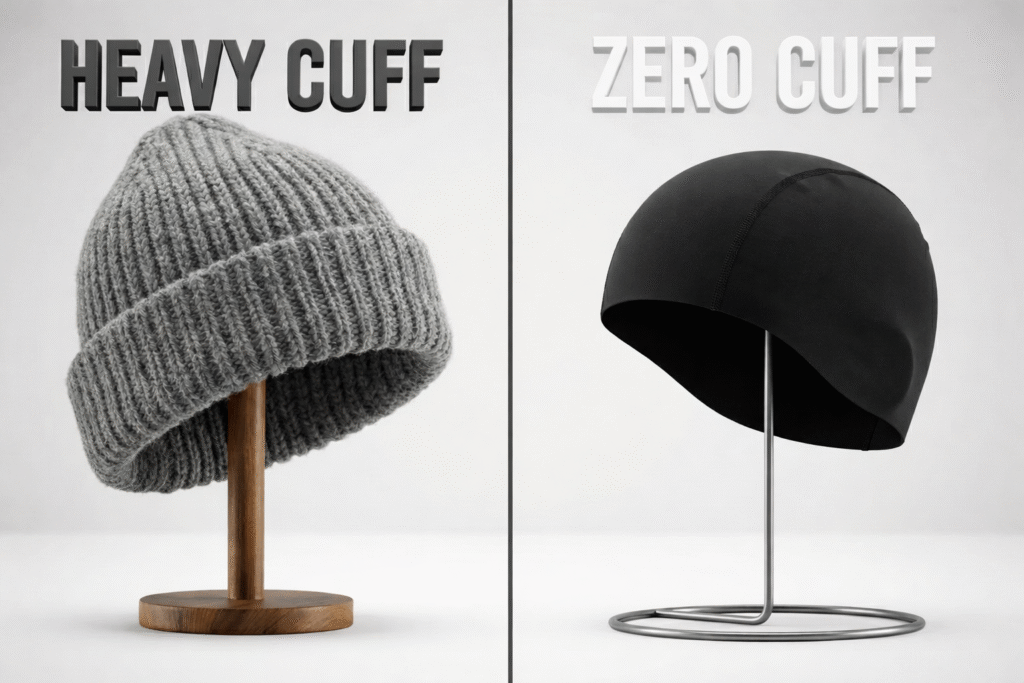
Selecting a beanie without cuff can improve physiological comfort by minimizing the constrictive band of fabric that traditionally compresses cranial arteries and retains excessive moisture at the brow.
Eliminating the “Tourniquet Effect” on Temporal Arteries
The “tourniquet effect” refers to a phenomenon where the multi-layer thickness of a folded cuff may exert localized pressure (approximately 10–15 mmHg in tight fits) on the Superficial Temporal Artery, potentially impeding optimal circulation.
Standard cuffed beanies typically create a 4-layer thickness zone composed of the body, the fold, and the seam. A beanie without cuff maintains a consistent single or double-layer edge. This reduction in material bulk mitigates the risk of “external compression headache,” a condition often associated with sustained tension on the scalp’s vascular network. A single-layer edge reduces circumferential pressure, which decreases the likelihood of vascular tension headaches.
Increasing Radiative Heat Loss at the Crown
Efficient thermal regulation is supported by the beanie without cuff, which permits passive convection and minimizes the heat retention often observed at the “hat band” line of cuffed alternatives.
The human head accounts for a significant portion of radiative heat loss, a factor that becomes critical during exertion. Double-layer cuffs can function as a “sweat sink,” retaining moisture against the forehead where airflow is frequently restricted. Sweat accumulation generally decreases if the hem thickness is reduced. By removing the fold, an un-cuffed beanie facilitates passive convection and helps stabilize cranial temperature.
What Distinguishes the Engineering of a Beanie Without Cuff?
The construction of a beanie without cuff typically relies on specific “decrease” knitting patterns and finer fabric gauges to ensure the garment contours the skull without the structural support of a fold.
Identifying “Decreased Crown” Knitting Patterns
High-quality cuffless beanies often utilize a specific “decrease” stitch pattern at the apex to close the fabric tube, ensuring it lays flat against the parietal bone without significant “bunching” or “coning.”
Lower-quality hats frequently use a “drawstring” closure which gathers excess fabric, creating a potential point or protrusion. A technical decrease knit gradually drops stitches as it approaches the crown. This technique mirrors the natural curvature of the skull. This precise shaping removes the need for the heavy fold used to weigh down simpler, tube-knit beanies.
Comparing Fabric Gauge: 12-Gauge vs. 7-Gauge
Cuffless beanies typically utilize a higher 12-gauge knit (finer yarn, tighter weave) to provide wind resistance without the bulk that 7-gauge cuffed beanies require for structure.
A “gauge” refers to the number of stitches per inch of fabric. A 7-gauge knit is coarser and thicker, often requiring a cuff to maintain its shape. A 12-gauge fine knit reduces fabric volume while maintaining a streamlined silhouette. This tighter weave structure generally provides effective wind blocking capabilities per millimeter of thickness compared to looser, chunkier knits.
When Should You Prioritize a Beanie Without Cuff?
A beanie without cuff is often preferred during helmet-mandated sports and high-output interval training where fit and moisture management are critical safety factors.
Integrating with Helmet Suspension Systems (MIPS)
A beanie without cuff supports MIPS (Multi-directional Impact Protection Systems) helmet performance by facilitating closer contact between the skull and the slip-plane liner, minimizing the gap often created by bulkier cuffed alternatives.
Modern helmets utilizing MIPS function by allowing a low-friction layer to slide 10-15mm in all directions upon impact. Adding a thick cuff may disrupt this mechanism and alter the helmet’s fit profile. A single-layer skull cap helps preserve the intended function of the safety system.
Managing Moisture During High-Output Intervals
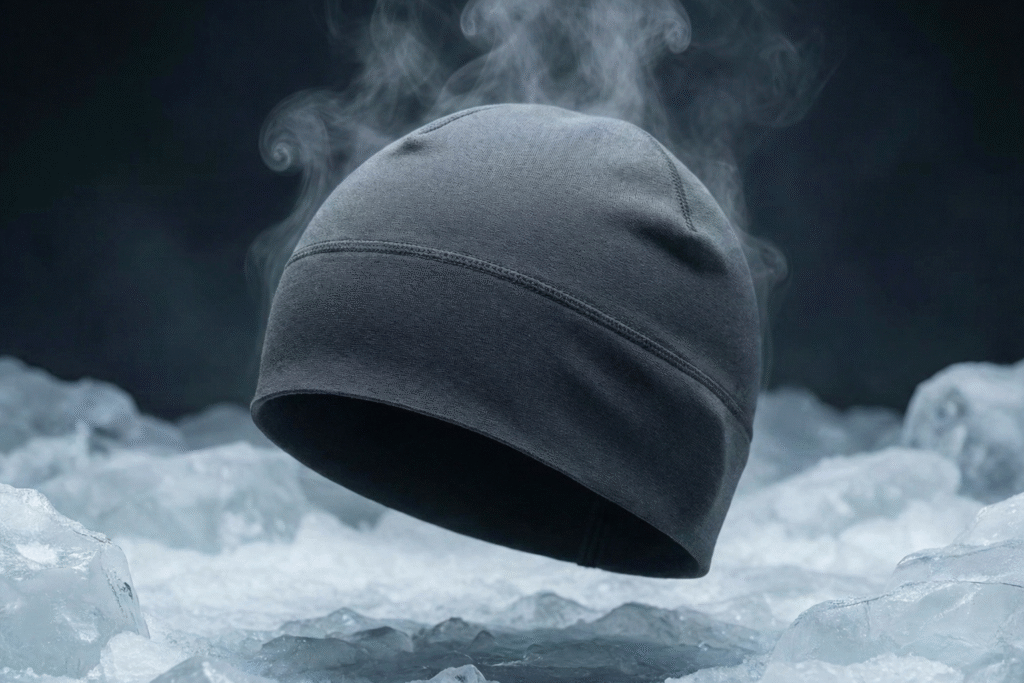
In “Stop-and-Go” activities like interval running or climbing, sweat trapped in a double-layer cuff may cool rapidly during rest phases, leading to “conductive chill” and an increased risk of hypothermia in extreme conditions.
Rapid cooling can occur if the fabric retains moisture against the skin during static periods. Single-layer Merino wool tends to accelerate moisture evaporation, helping to mitigate this hypothermic cooling effect. The absence of a moisture-retaining cuff ensures that the fabric dries at a more consistent rate across the surface area of the head.
How to Style a Beanie Without Cuff Based on Facial Geometry?
Effective styling of a beanie without cuff involves analyzing facial width-to-height ratios and utilizing the garment’s adjustable “stack” to visually balance facial symmetry.
Counteracting Round Faces with Vertical “Stacking”
Vertical “stacking” can counteract a round face shape by visually altering the width-to-height ratio from 1:1 to a more elongated 1:1.3.
“Stack” refers to the excess fabric reservoir sitting above the cranium. A vertical crown reservoir extends visual height, balancing round facial symmetry. This creates a linear aesthetic that elongates the profile, a visual correction that is difficult to achieve with a tight-fitting watch cap.
Utilizing the “Micro-Roll” for Docker Cap Aesthetics
The “Fisherman” or “Docker” aesthetic requires the hat to sit above the ears, a style achieved on a beanie without cuff via a precise 0.5-inch micro-roll which is typically not feasible on pre-sewn cuffed variants.
The raw edge of a cuffless beanie allows for variable adjustment. A pre-sewn cuff is fixed at 2-3 inches. By rolling the raw edge up slightly, one creates a utilitarian aesthetic that clears the ear without creating the bulk associated with a full fold.
How Does the Beanie Without Cuff Perform vs. Cuffed Variants?
Performance analysis indicates that the beanie without cuff offers measurable reductions in weight, drying time, and hem thickness compared to standard cuffed models.
| Metric | Beanie Without Cuff | Standard Cuffed Beanie |
| Hem Thickness | ~2mm – 4mm | ~8mm – 12mm (4 layers) |
| Weight (Avg) | 40g – 60g | 80g – 110g |
| Drying Time | Fast (High Surface Area) | Slow (Moisture Trapped in Cuff) |
| Goggle Fit | Seamless (Under Strap) | Obstructive (Over Strap) |
How to Validate if a Beanie Without Cuff Suits Your Needs?
Validating if a beanie without cuff suits your specific needs involves assessing your usage profile regarding eyewear, headphones, and temperature ranges.
Use the following checklist to determine if this technical profile matches your use case:
- [ ] Buy if: You use over-ear headphones (Cuffed beanies may compromise the audio seal and create pressure points).
- [ ] Buy if: You wear glasses (Thick cuffs can press the temple arms into the temporal bone, causing discomfort).
- [ ] Avoid if: You require hearing protection from wind chill < 20°F (A single layer may provide insufficient insulation for the ears in extreme cold).
In summary, the choice of a beanie without cuff is driven by three primary factors: reducing vascular compression, optimizing thermal regulation during exertion, and ensuring seamless compatibility with technical headgear.